Research Leadership Mastery
Nobody taught you how to lead a research team.
And somehow, you figured it out anyway. You learned by doing. By trial and error. By carrying more responsibility than anyone warned you about. You’ve built something meaningful. But chances are, it’s taken more out of you than it should.
This 6-month program is for research leaders who are ready to stop surviving and start leading with clarity. You’ll build practical systems, strengthen your leadership skills, and create a lab that supports your ambition, without sacrificing your life in the process.
Join 200+ research leaders from Harvard,
Max Planck, NIH, and top universities worldwide
Why leading a research team feels overwhelming at times.

The role of research team leader has become nearly impossible to do well.
You're expected to be the visionary, the manager, the mentor, the trainer, and the chief fundraiser.
Here's what we hear from researchers like you:
"I don't have enough time for my own work."
Your days fill with meetings, emails, and putting out fires. Deep thinking gets pushed to evenings and weekends. You know this isn't sustainable, but you can't figure out what to cut.
"My team needs more from me than I can give."
Most of your team are trainees. They're smart, but they're still developing technical skills, professional habits, and the ability to plan and follow through. The intellectual driving of the program is almost entirely your job.
"Systems exist on paper, but they fall apart in practice."
You've tried to put systems in place. Inventories, onboarding documents, project tracking. But people don't follow through. And you don't have the bandwidth to enforce them.
"No one wants this job to be their whole life anymore. Including me."
Values have shifted. You want to do meaningful work without sacrificing your health and relationships. Your team feels the same. But some experiments still require flexibility, and the pressure to produce never lets up. You're caught in the middle.
None of this means you're doing anything wrong.

"Stefanie, Alex and Robert have accomplished mission impossible for me. The program helped me become crystal-clear about what needed to change and how to implement change to run my team without feeling stressed all the time or stressing my team. During this half-year implementation course I incorporated strong management foundations with my team and embraced a bigger vision for my work and leadership."

"I use your Systems Framework and Agile project management. Since our work together, I've been building SOPs for all the different aspects of my clinical and research work. As a result, I have been recruited to be the core faculty in the fellowship program. They recruited me because I am now a systems thinker and able to effectively move from idea to execution."
What your team could look like.
When you implement proven leadership and management systems, everything shifts.
-
Your team becomes more independent.
No more constant interruptions. -
Projects move faster and more predictably.
-
Communication becomes clear, calm, and aligned.
-
Culture strengthens, motivation rises, and conflict decreases.
-
You finally have time to think, write, and innovate.
-
Stress levels drop, for you and your team.
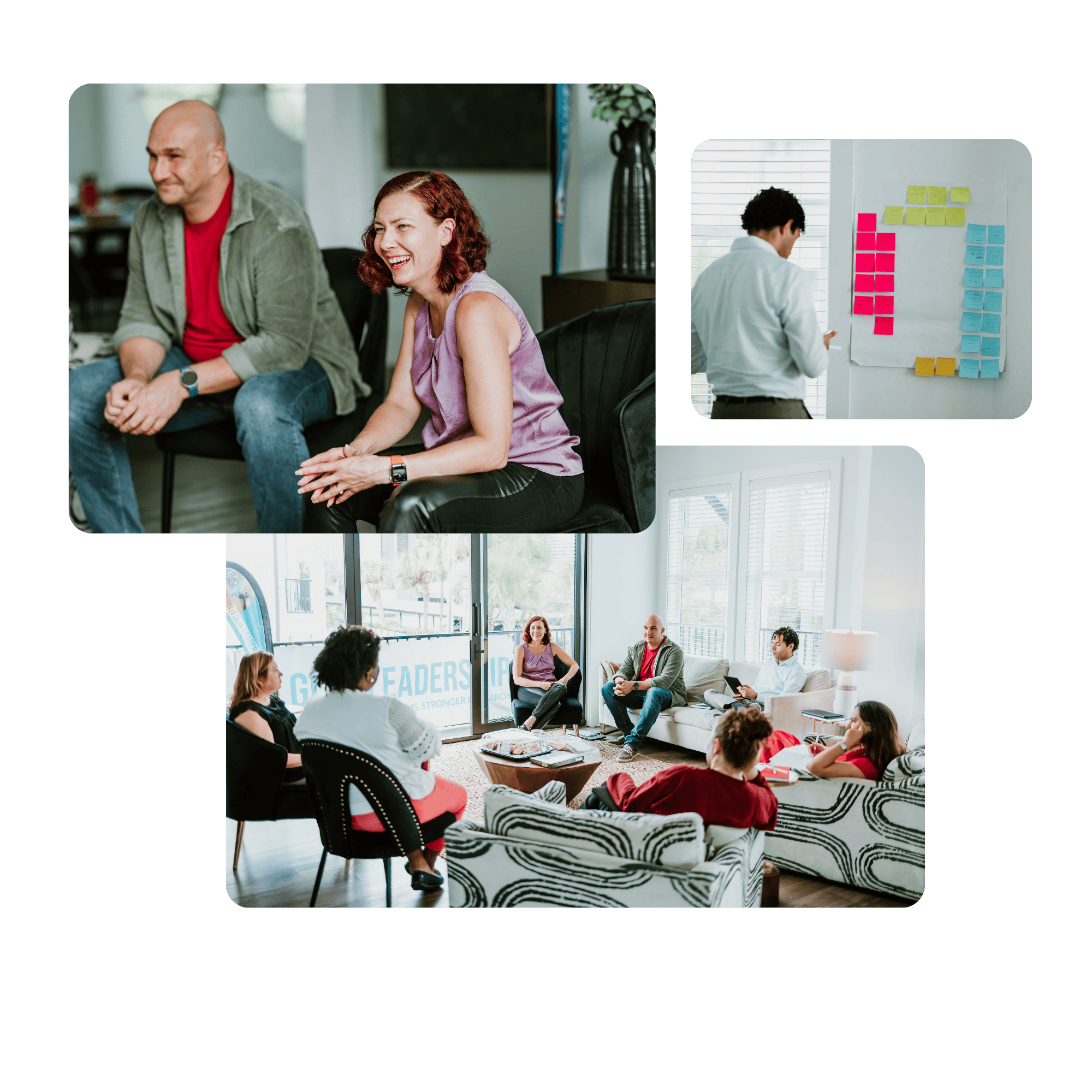
LEARN. IMPLEMENT. TRANSFORM.
A research-tested leadership development process built for researchers, by researchers.
-
L - LEARN
Evidence-based training modules on research leadership, team management, and operational systems tailored to research teams of all sizes.
-
I - IMPLEMENT
With expert coaching, you adapt systems to your team, strengthen communication, and troubleshoot challenges in real time.
-
T - TRANSFORM
Your team becomes more independent. Culture strengthens. You reclaim research time, without burning out.

WHAT YOU'LL BUILD
This isn't just a bunch of new knowledge. You'll leave with your biggest problems solved & a strategy you can use.
Most leadership programs give you ideas and hope they stick. This one is built around implementation.
Every module addresses a specific piece of your research leadership. And every module adds to an integrated 5-year strategy document that becomes your roadmap going forward.
By the end of the program, you'll have:
A way to structure your days so you stop running out of energy before you run out of work. Right now, deep thinking gets pushed to evenings and weekends. You'll change that.
A team that takes real intellectual and practical ownership of their projects instead of waiting for you to make most decisions, troubleshoot problems, and hand out the next step.
Systems your team maintains on their own because they helped build them, not because you're standing over them checking.
A repeatable approach to developing your team members' thinking, writing, and technical skills so you're not reinventing the wheel every time a new trainee walks through the door.
A non-confrontational approach to feedback and conflict so problems do not fester until they blow up.
A 5-year strategy for your research program that connects your people, your projects, and your priorities into something you can steer by.
This isn't a binder that sits on a shelf. It's a living strategy you'll build piece by piece, with coaching support to help you implement it in real time.
THE 9 MODULES
9 Modules. 6 Months. A complete leadership foundation.
MODULE 1: The One Where You Finally Get Your Evenings Back
Time, energy, stress, and your nervous system
You can't lead well when you're running on empty. This module helps you understand your capacity, identify what's draining you, and make concrete changes to protect your time and energy.
You'll leave with: Protected deep-work blocks on your calendar, at least one commitment reduced, and a personal "window of tolerance" cheat sheet.
MODULE 2: The One Where You Define Your Leadership Identity & Define Your Leadership Styles On Purpose
Leadership identity, style, and how you show up
You can't lead well on autopilot. This module helps you understand your default leadership patterns, why they developed, and what it looks like when you're operating from a place of stress versus genuine choice.
You'll leave with: A clearer picture of your leadership style and its blind spots, a personal values statement you'd actually want to hang on your wall, and a concrete understanding of how your nervous system state shapes how your team experiences you.
MODULE 3: The One Where You Build A High-Performance Culture Without Fear
Power dynamics, helping people take ownership, and having difficult conversations
You have power on your team whether you want it or not. There's already a structure shaping who speaks up, how much people contribute intellectually, and who defers to whom. This module makes that structure visible and gives you tools for using power responsibly, navigating conflict without it sliding into drama.
You'll leave with: A map of your team's power dynamics and where the unhealthy patterns come from, a clearer sense of which protective behaviors you reach for under pressure and how to change that for better outcomes, and a step-by-step Team Reset protocol for the conflict or misalignment that needs to be addressed directly.
MODULE 4: The One Where You Get Clear About & Clean Up Power Dynamics
Power dynamics, helping people take ownership, and having difficult conversations
You have power on your team whether you want it or not. There's already a structure shaping who speaks up, how much people contribute intellectually, and who defers to whom. This module makes that structure visible and gives you tools for using power responsibly, navigating conflict without it sliding into drama.
You'll leave with: A map of your team's power dynamics and where the unhealthy patterns come from, a clearer sense of which protective behaviors you reach for under pressure and how to change that for better outcomes, and a step-by-step Team Reset protocol for the conflict or misalignment that needs to be addressed directly.
MODULE 5: The One Where You Build a Team That Doesn't Fall Apart When One Person Leaves
Team architecture: how you structure roles, distribute authority, and bring new people in
Most research teams aren't designed, they accumulate. Someone joined because they were available. Roles evolved without being strategic about using people's strengths. And then one person leaves and suddenly you realize the whole thing was running on one person's tribal knowledge. This module is about building your team on purpose, from how you organize decision-making authority to how you bring people in so they can contribute without needing you for everything.
You'll leave with: A clear picture of your current team structure and where it's working against you, decision rights mapped explicitly to roles on your team, and an onboarding framework that reduces handholding without reducing the welcome.
MODULE 6: The One Where You Stop Reteaching the Same Things Over and Over
Building a skills curriculum your team can use and you don't have to rebuild each time
You've explained how to read a paper critically at least six times these last three years. You've walked someone through structuring a methods section more times than you can count. You know you need something more systematic, but building it keeps getting pushed. This module gives you a framework for building a skills curriculum for your team, covering reading, writing, analysis, experiment design, creative thinking, and presentations, so the teaching you invest in once keeps working long after that conversation ends.
You'll leave with: A skills gap map for your current team, a modular teaching framework you can build on over time, and at least one reusable training resource you've built by the end of the module.
MODULE 7: The One Where People Actually Take Ownership
Motivation, self-determination theory, job crafting, and influence inside and outside the team
When someone stops caring about their work, most of us either avoid the conversation or try harder to motivate them from the outside. Neither works for long. This module gives you a research-backed framework for understanding what actually drives people and what kills their motivation, how to help team members reshape their work in ways that re-engage them, and how to build your own influence inside and outside your team without it feeling like politics.
You'll leave with: A motivation audit you can use with each team member, a job-crafting conversation framework, and a personal influence map that shows you where to invest your energy and where you've been spinning your wheels.
MODULE 8: The One Where Nothing Falls Through the Cracks
Core research team systems: project management, experiment planning, ops, and learning from what goes wrong
Most project crises aren't surprises. There were signs weeks or even months earlier. This module builds the foundation for catching problems before they become urgent or frustrating, a project tracking approach that gives you a real picture of where things stand, an experiment planning process that doesn't rely on heroics.
You'll leave with: A clear picture of where your current systems are breaking down and a concrete plan for addressing one of them.
MODULE 9: The One Where It All Adds Up to a 5-Year Strategy
Building a research program that makes the impact you actually care about
You got into this because the work matters. But somewhere between managing people, chasing funding, and keeping everything running, it can get harder to stay connected to that. This module is about stepping back and thinking strategically about where your research program is going, what it will take to have the kind of impact you set out to have, and how to make better decisions about what to say yes to and what to let go of so you're moving toward that, not just staying busy.
You'll leave with: A 5-year strategy for your research program that pulls together your work during the previous 8 modules, including where you're going, what it will take to get there, and the decision criteria that will help you protect that direction when the next shiny opportunity or urgent crisis shows up.
"For the first time in my career, I feel confident, independent, and the leader that I always wanted to be.
I first met Stefanie shortly after getting tenure and feeling conflicted about what I truly wanted to do next in my life and career. I was proud of having attained tenure, but I had created a life where I kept putting off fun until I had reached major milestones. This created a lot of stress, low energy, and loss of confidence in my own abilities to keep up.
In just 6 months of working with her, I feel confident in my abilities—not because I know exactly how to handle every challenge, but because I know I'm capable of overcoming them thanks to all the ideas and tools she has shared with me."
"I made a team manual and have been introducing many of the concepts to my team. When I asked for feedback from my students, they told me that our team works much better now, they understand their work better, and they love the templates.
The program not only made my life easier and helped me decentralize the team, it also made the students much happier!"
"I just came out of this planning retreat feeling really, really pumped. It showed me that I can build a calendar that's busy and high-performing, but also actually honors what I want—my writing time, my priorities, not just what my 'good little professor' job demands.
Going into 2026, especially Q1, I'm excited to push the team out of its cozy zone and hold myself accountable by really auditing how I spend my time, instead of just believing the story I tell myself about it."
Is this for you?
This program is designed for faculty and group leaders who lead research teams, whether you're new to leading and still finding your footing or a more seasoned researcher who's ready to be more intentional about how you lead.
THIS IS FOR YOU IF:
-
You've been leading a team for a while, and some parts are working. But other parts drain you more than they should.
-
You're ready to work on yourself, not just collect tips. Leadership starts with self-awareness, and you're willing to look at your own patterns and defaults.
-
You want to implement, not just learn. You need a structured way to put good ideas into practice, with support and accountability along the way.
-
You're willing to commit 2-3 hours per week for 6 months.

THIS IS NOT FOR YOU IF:
-
You're looking for a quick fix. Real change takes time.
-
You're not ready to look at yourself. Leadership is an inside job.
-
You want grant writing or technical research skills. This program is about leading people and building systems.
WHAT YOU GET:
The Research Leadership Mastery Program Course + High-Achieving Community + Weekly Coaching
-
Full access to the course for at least 1 year
-
9 training modules with downloadable worksheets
-
Step-by-step processes to implement with your team
-
Weekly coaching calls in a small group setting
-
Case studies to illustrate best approaches to difficult situations
-
BONUS: 60-minute kickoff 1:1 session to create a custom plan
-
BONUS: Workbook with training exercises
You are who you surround yourself with.
The Research Leadership Mastery community is a group of hand-selected, high-reaching researchers who want it all: success and fulfillment.

Your trainers are researchers who've walked this path.
Dr. Stefanie Robel
Stefanie grew up in Berlin, Germany and completed a Ph.D. in Neuroscience in Munich before permanently relocating to the US.
She became a personal development and leadership nerd during her postdoctoral training, initially to increase her competitiveness and later because she realized she could use these strategies and tools to create a happier, balanced life and increase her levels of success.
She started her independent research program in 2016, built a thriving research team, and brought in more than $6M in funding during her first two years on the tenure track. She has since earned tenure and moved institutions to take her research and institutional leadership to the next level.
Stefanie started GLIA-Leadership in 2019 to systematize leadership knowledge and management approaches specifically for research teams. Her mission is to change the academic culture from negativity and chronic stress to one where people express their unique brilliance and live a fun, joyful, happy life.
Dr. Tanya Garcia
Tanya is a biostatistician and certified coach who builds systems that help people produce excellent work. She earned her Ph.D. in Statistics at Texas A&M and is a tenured Associate Professor at UNC-Chapel Hill, where she leads a transdisciplinary team of statisticians and neuroscientists and has maintained continuous NIH funding since 2013.
Her statistical work focuses on Huntington's disease, developing methods that make clinical trials more reliable. That research earned her the Gertrude M. Cox Award and election as a Fellow of the American Statistical Association.
She developed "Create Spicy Science," a neuroscience-informed framework for identifying gaps, generating novel ideas, and writing persuasively. Her 42 trainees have collectively earned 80 competitive grants, fellowships, and faculty positions—a track record that earned her the NINDS Landis Award for Outstanding Mentorship.
She was a founding participant of Research Leadership Mastery and now serves as a coach and trainer for the program, helping PIs build the systems and skills she wished someone had taught her earlier.
Your Invesment:
-
Payment plans available.
-
Trainee or limited-funds stipends available for each cohort. Inquire when you apply.
-
Funding may be available through your institution: startup funds, indirects, departmental funding, training grants, or private funds.
$6,000
$5,000
Frequently Asked Questions

How much time will I need for the program?
Plan for 2-3 hours per week. Each training module runs 30-60 minutes, plus time for practical assignments and implementation with your team.
How is this different from university leadership workshops?
University workshops provide a day or two of content without ongoing support. This program runs for 6 months with weekly coaching calls, so you're implementing and adjusting in real time.
I'm very busy. Will this over-commit me even more?
We start with time and energy in Module 1 precisely because you need breathing room to implement everything else. That said, we encourage you to only apply if you can commit 2-3 hours per week.
What funds can I use to pay for the program?
Most participants use institutional funds: startup funds, departmental funds, indirects, or training grants. Payment plans are available.
Is there a discount for trainees or those with limited funding?
There are limited trainee spots available at a discounted tuition for each cohort. Please inquire when you apply.
What's your refund policy?
Because we work in small cohorts, no refunds are available once you commit. We'll discuss whether the program is the right fit during your application call.
You already know you can't be a great leader without investing in your skills and strategies.
You deserve to lead in a way that feels sustainable. To build a team that works well without depending on your constant attention. To have time for your own thinking and writing and life outside of work.
It's possible. And you don't have to figure it out alone.
